
Few physical sensations are as unsettling as a sharp pop, click, or sudden lock in your jaw while eating dinner at your favorite restaurant or driving down the highway. You might feel a dull ache radiating into your temple or experience a sudden panic when your mouth refuses to open past a certain point. For many residents living in the Edmonton metropolitan area and surrounding communities like Beaumont, these are not random quirks of anatomy; they are explicit warning signs from your temporomandibular joint (TMJ).
When your jaw begins to dysfunction, the immediate instinct for many Albertans is often to look for dental solutions like mouthguards or to simply ignore the issue until it goes away. However, jaw clicking and locking are primarily musculoskeletal and neuromuscular problems that require specialized physical rehabilitation rather than just a dental fix.
Why Is My Jaw Clicking, Popping, or Locking?
Jaw clicking occurs when the TMJ’s internal articular disc slips forward and snaps back into position during movement. Locking happens when this disc remains permanently displaced, physically blocking the lower jawbone from tracking through its normal range of motion.
This disc is a flexible cartilage cushion allowing smooth jaw movement. When the jaw clicks, it is called disc displacement with reduction. With the mouth closed, the disc sits misplaced out of its pocket. As you open your mouth, the lower jaw pulls forward, forcing itself under the slipped disc. The pop is the bone snapping back onto the disc.
If the condition worsens, it can transition into disc displacement without reduction, commonly known as a locked jaw. In this stage, the disc remains bunched up in front of the joint, acting like a structural doorstop. Your lower jaw cannot slide past it, leaving you unable to open your mouth fully.
Several underlying factors trigger this progressive mechanical breakdown:
- Teeth Grinding: Chronic nocturnal teeth grinding and tightening overwork the masseter and temporalis muscles, forcing the joint out of alignment.
- Bad Bite and Posture: An uneven bite combined with forward head posture places immense, continuous strain on the anterior neck muscles and jaw ligaments.
- Micro-trauma: Whiplash from a past vehicle accident or direct trauma to the face can permanently stretch or tear the delicate ligaments holding the disc in place.
How TMJ Physiotherapy Resolves Jaw Dysfunction
Targeted therapy corrects jaw tracking by releasing hypertonic (chronically tight) masticatory muscles, mobilizing stuck joints, and retraining your neuromuscular pathways. Rather than masking the facial pain, it structurally restores the natural sliding mechanics of the articular disc and lower jawbone.
Many people are surprised to learn that a physical therapist can work inside their mouth, but intraoral assessment is the gold standard for treating jaw disorders. When you commit to a structured program of TMJ physiotherapy, treatment targets the complex matrix of muscles and nerves surrounding the joint.
Advanced Jaw Muscle and Intraoral Treatment Techniques
Treatment begins by addressing the nervous system’s defense mechanism. When a joint is injured, surrounding muscles clamp down in a protective spasm. We use precise intraoral myofascial release to target the side jaw muscle and inner jaw muscles deep inside the jaw that are completely inaccessible from the outside of the cheek.
In addition to manual release, advanced treatment protocols frequently incorporate:
- Joint Mobilization: Gentle, passive glides performed by the therapist to restore the joint’s accessory motions and widen a restricted joint space.
- Dry Needling: Inserting fine needles directly into stubborn trigger points within the masseter muscle to instantly break the cycle of chronic muscle spasms.
- Postural Re-education: Addressing deep cervical flexor weakness in the neck to eliminate the forward head posture that pulls the lower jaw backward.
The Insider Insight: Why Your Mouthguard Might Be Making Your Jaw Worse
There is an alternative viewpoint in the medical community that deserves attention. The standard medical response to jaw clenching or clicking is to prescribe a flat, hard plastic nightguard. While these splints are highly effective at protecting your tooth enamel from being worn down by attrition, they often act as an expensive band-aid that completely ignores the underlying muscular imbalances.
In fact, for a specific subset of patients, standard mouthguards can actually increase jaw muscle activity. If a splint is not perfectly balanced to your jaw’s natural neurological resting position, your brain may perceive the plastic as an object to chew on, exacerbating nocturnal clenching.
True recovery requires addressing the joint mechanics. If you reside in the local Edmonton metropolitan area, booking an evaluation at a dedicated physiotherapy clinic in beaumont will provide you with a comprehensive assessment that looks past your teeth to analyze how your neck, spine, and cranial muscles cooperate during movement.
Treatment Approaches: Targeted Therapy vs. Dental Splints
When deciding how to manage your jaw clicking and locking, it helps to look at how different interventions stack up against one another.
| Feature | Targeted Musculoskeletal Therapy | Standard Flat Dental Splints |
| Primary Goal | Restores joint mobility and muscle length | Protects teeth from enamel wear |
| Treatment Area | Jaw, neck, upper back, and nervous system | The occlusal (biting) surfaces of teeth |
| Long-Term Utility | Corrects movement patterns to stop clicking | Manages symptoms while worn at night |
Pros and Cons of Active Structural Rehabilitation
Evaluating the benefits and limitations of physical therapy for jaw issues is essential for setting realistic recovery expectations.
Pros:
- Targets the Root Cause: Identifies and corrects poor joint tracking, muscle asymmetry, and cervical spine dysfunction.
- Non-Invasive: Avoids permanent dental alterations, irreversible orthodontic work, or invasive joint surgeries.
- Empowers the Patient: Provides you with specific intraoral stretches and posture corrections to abort a jaw spasm before it locks.
Cons:
- Requires Active Commitment: Success depends on performing prescribed daily home exercises rather than simply wearing a device passively.
- Not an Instant Fix: Soft tissue remodeling and neuromuscular retraining take several weeks of consistent treatment to show stable changes.
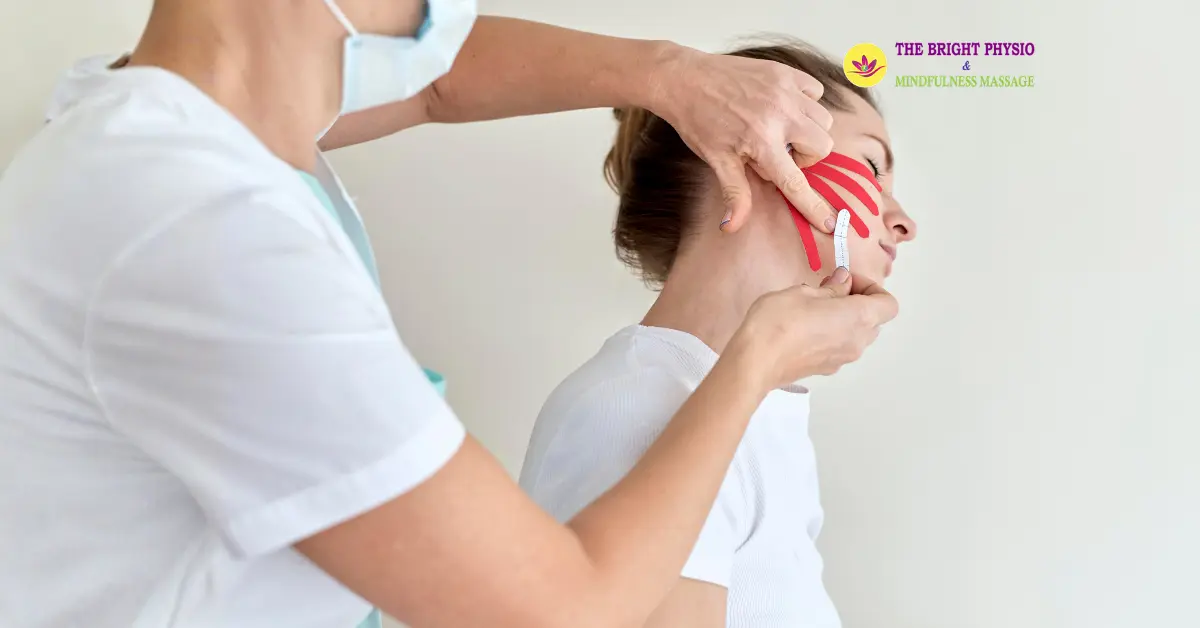
A specialized assessment uncovers the structural asymmetry causing disc displacement. First, we objectively measure your mandibular range of motion using a specialized ruler; a healthy jaw opens 40 to 50 millimeters and moves 10 millimeters side-to-side. Next, we map movement quality, identifying “S-curve” or “C-curve” deviations to pinpoint late-firing pterygoid muscles or restricted joint capsules.
Finally, we evaluate your upper cervical spine, as upper neck issues frequently refer pain to your teeth and face. Choosing practitioners well-versed in TMJ physiotherapy ensures your neck and jaw are treated as an inseparable, functional unit rather than isolated parts.
Simple Habits to Protect Your Jaw Joint Today
While awaiting your clinical evaluation, you can implement immediate behavioral modifications to reduce the mechanical load on your articular disc:
- Adopt the Resting Tongue Position: Keep the tip of your tongue resting gently on the roof of your mouth, just behind your front teeth, with your teeth slightly apart. This keeps your masseter muscles structurally relaxed.
- Avoid Unilateral Chewing: Consciously split your food evenly between both sides of your mouth to prevent asymmetrical wear on one joint.
- Modify Your Diet Mechanics: Cut raw apples, tough meats, and dense breads into bite-sized pieces rather than opening your mouth to its absolute maximum limit to bite into them.
If you are tired of dealing with daily facial pain or living with the constant fear that your jaw will lock during a meal, consider seeking an expert opinion. For personalized, hands-on care tailored to your specific anatomy, visiting our highly rated physiotherapy clinic in Beaumont can provide you with the targeted diagnostics and manual therapy required to restore pain-free, smooth joint movement.